
Clinical team
Dentists in Turkey: training, specialists and how our team works
Dentists in Turkey complete a five-year university dentistry degree, register with the Ministry of Health and, in private practice, with their regional dental chamber. Specialists pass a national exam (DUS) and train for three to four more years. Here is how to verify a dentist and who does what.
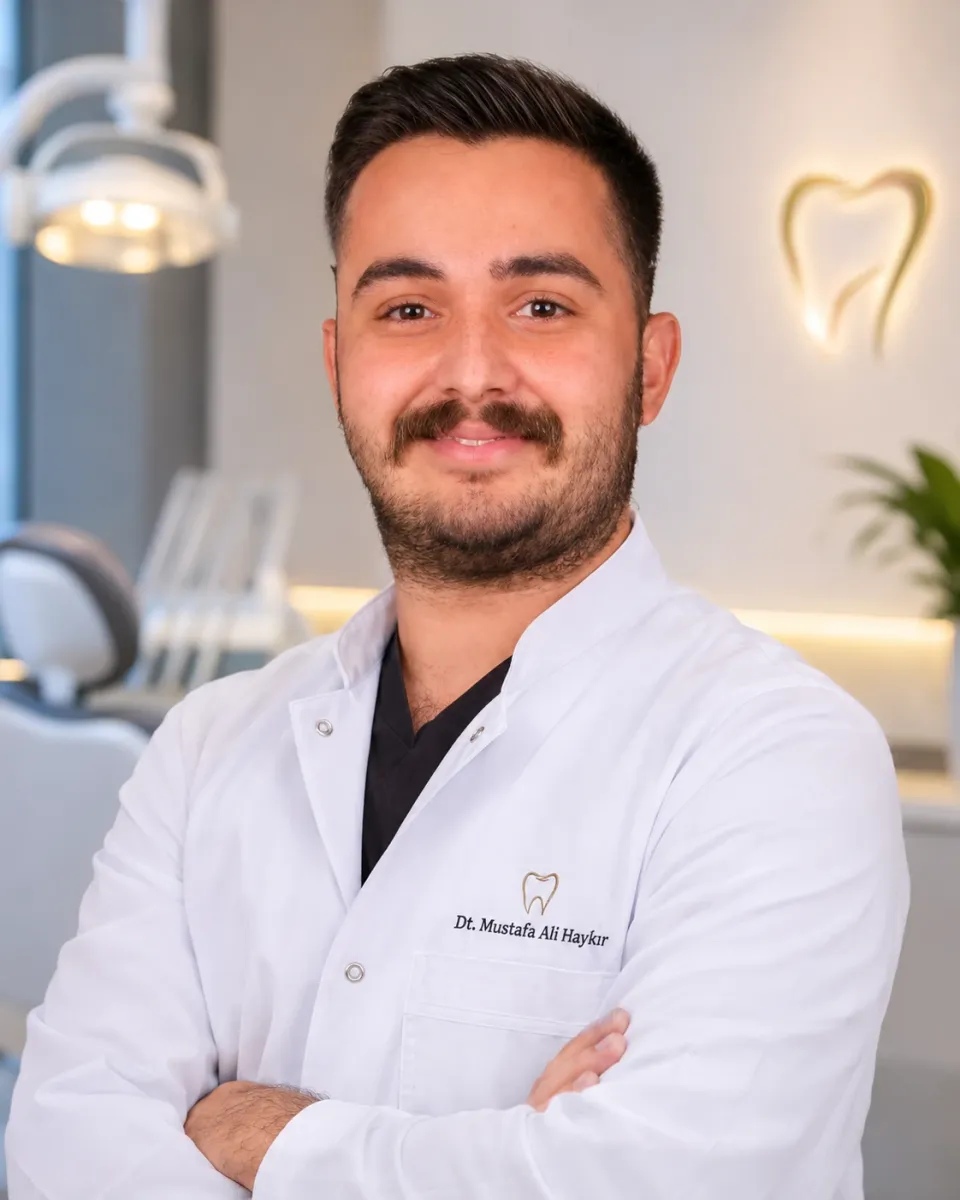
Dt. Mustafa Ali Haykır
Dentist — aesthetic dentistry and smile design · Dentist — İstanbul Medipol University, Faculty of Dentistry
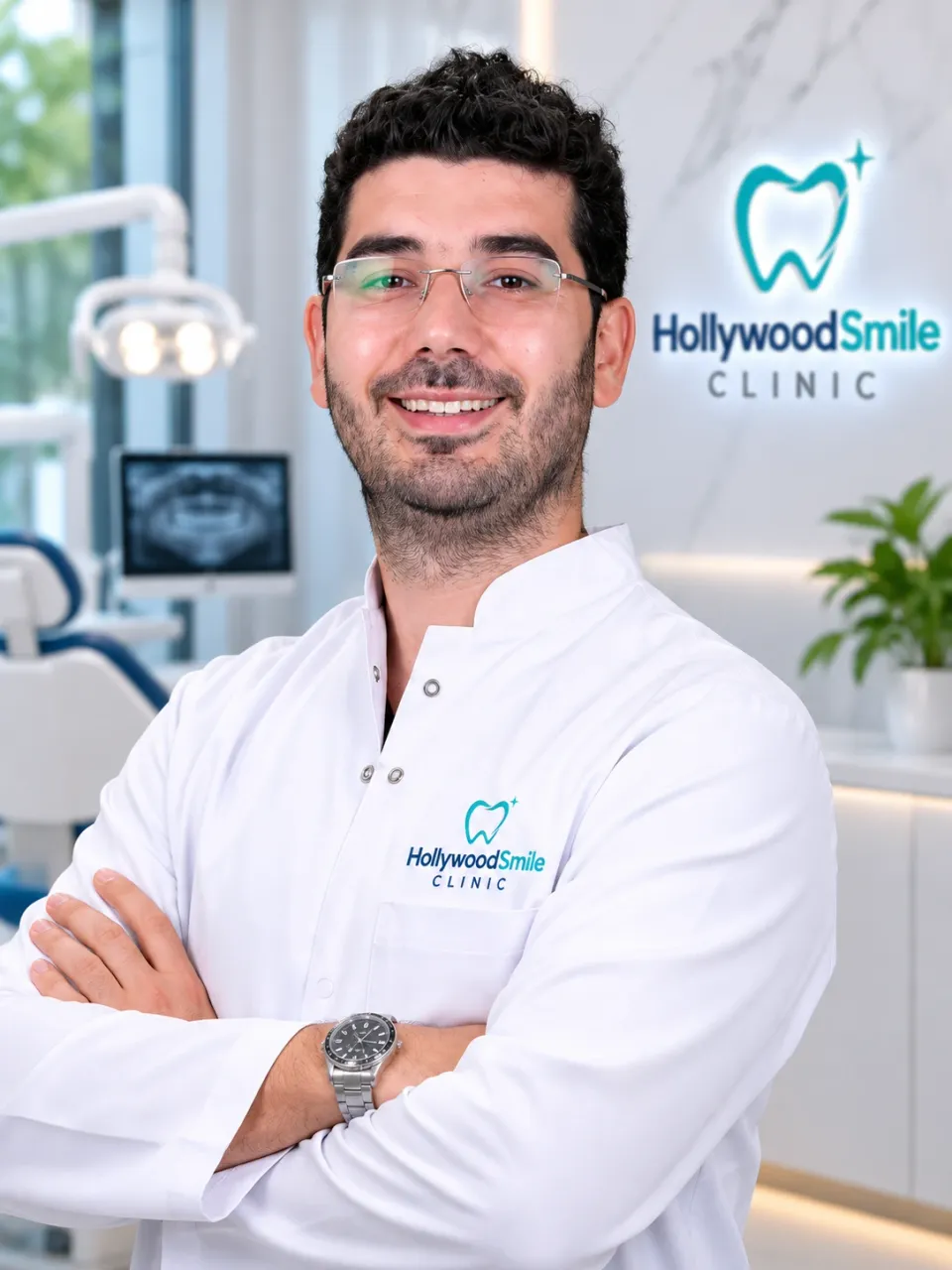
Dt. Burak Arslanoğlu
Dentist — aesthetic dentistry, smile design and implant-related care · Dentist — İstanbul University, Faculty of Dentistry (graduated 2010)
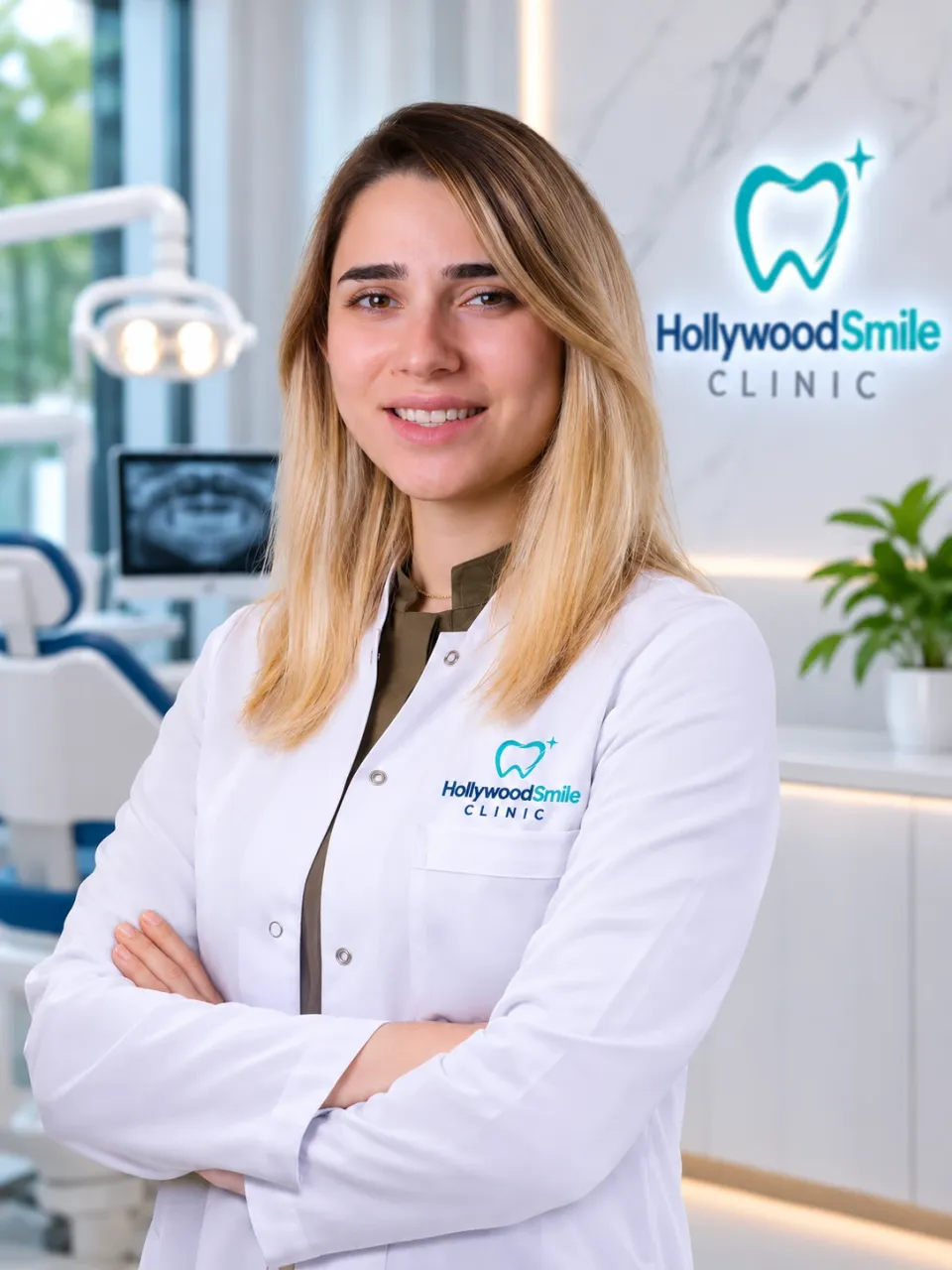
Dt. Yağmur Çömlekçioğlu
Dentist — aesthetic dentistry and implant-related care · Dentist — İstanbul University, Faculty of Dentistry


Dentists in Turkey qualify through a five-year university degree in dentistry, register with the Ministry of Health and — if they work in private practice — join the dental chamber for their province, which is part of the Turkish Dental Association. Specialists pass a national specialisation exam and complete three to four further years of training.
This page explains how that system works, how you can check a dentist's qualifications, which kind of specialist handles which problem, and how our team divides the work on a typical treatment plan. It also lists the questions worth asking any dentist before you agree to treatment.
Individual dentist profiles — names, qualifications, specialist titles and registration details — appear alongside this text once the clinic owner has entered and verified them. This page deliberately names no one: its job is to help you understand and check those profiles, not to replace them.
Key takeaways
- Dentistry in Turkey is a five-year university degree; the final year is a compulsory clinical internship, according to the Council of European Dentists.
- Dentists must register with the Ministry of Health before practising, and independent private dentists must join their regional dental chamber.
- Turkey recognises nine dental specialties. Specialists pass the national Dental Specialisation Examination (DUS) and train for three or four years, depending on the specialty.
- Cosmetic dentistry and implantology are not separate specialties in Turkey; many general dentists and several specialists provide them.
- Turkish rules prohibit dentists from claiming a specialisation beyond what their diploma or certificate allows — so ask to see specialist certificates.
- Complex plans usually involve a team: a restorative dentist or prosthodontist, a surgeon, a periodontist and a dental technician.
- Always ask who will carry out each step of your treatment, not only who will plan it.
How are dentists in Turkey trained?
A dentist in Turkey is a graduate of a faculty of dentistry at a public or private university who holds the Doctor of Dental Surgery degree (diş hekimi). According to the Council of European Dentists' Manual of Dental Practice 2026, the undergraduate programme typically lasts five years and comprises 300 ECTS credits, and the final year is dedicated to a compulsory one-year clinical internship.
Entry to dental school is competitive. Turkish students are placed through the national university entrance examinations (YKS), while international students sit a separate admission exam (YÖS). The Council of Higher Education (YÖK) oversees the quality of dental education, and the Council of European Dentists notes that some Turkish dental programmes also follow the curriculum framework of the Association for Dental Education in Europe (ADEE).
The same manual reports that Turkey had 105 dental faculties in 2024 — 75 public and 30 private — and that programmes are taught in Turkish and English, with English-taught programmes offered mainly by private universities. That growth means Turkish-trained dentists come from a wide range of institutions, which is one reason it is worth asking where a dentist trained and what postgraduate training they have done.
What does the undergraduate degree cover?
Like dental degrees in Europe, the UK and North America, a Turkish dentistry degree combines basic medical sciences (anatomy, physiology, pharmacology, microbiology) with clinical dentistry: restorative and prosthetic dentistry, periodontology, endodontics, oral surgery, orthodontics, paediatric dentistry and radiology. Graduates are general dentists who can provide a broad range of routine treatment.
What a degree does not do is make every graduate equally experienced in complex work such as full-arch implant surgery or full-mouth rehabilitation. Those skills come from specialist training, structured postgraduate courses and supervised experience — which is why the follow-up questions in this guide matter.
How are dentists registered in Turkey?
Registration is the formal process that allows a qualified dentist to practise. In Turkey it has two parts: registration with the state and membership of the professional chamber.
Ministry of Health registration
The Council of European Dentists states that it is mandatory for dentists to register with the Ministry of Health before being granted authorisation to practise. On graduation, dentists register with the Ministry's Dental Informatics System (DHBS), which is used for clinical data entry, patient follow-up and obtaining a work permit. Specialists must also register their specialist status with the Ministry.
Dental chamber and Turkish Dental Association membership
The Turkish Dental Association (Türk Dişhekimleri Birliği, TDB) is the national professional body for dentists, made up of regional dental chambers (Dişhekimleri Odası). According to the Council of European Dentists, membership is mandatory for dentists in the private sector: independent private practitioners must apply to the chamber for the province where they practise within one month of opening their practice, while dentists employed in public institutions are not legally required to join. The manual records over 40,000 TDB members in August 2025.
Regional chambers have responsibilities for professional conduct within their province, so a dentist's chamber is a useful point of contact if you need to confirm membership.
Language and nationality requirements
The Council of European Dentists notes that registration criteria include Turkish citizenship and legal residence, and that dentists must demonstrate fluency in Turkish. In practice, this means the dentists treating you in a licensed Turkish clinic should be Turkish-registered dentists; if a clinic tells you a visiting foreign dentist will treat you, ask how that dentist is authorised to practise in Turkey.
Continuing professional development
Continuing professional development (CPD) is the ongoing training dentists do after qualifying. In Turkey, CPD is not legally mandatory, but the Turkish Dental Association runs and accredits CPD courses through its Supreme Board of Continuing Dental Education. The Council of European Dentists reports that dentists who collect 40 credits over four years receive a CPD certificate. A CPD certificate is a reasonable thing to ask about — it shows that a dentist keeps their knowledge current — but it is not the same as a specialist title.
How do dentists become specialists in Turkey?
A dental specialist in Turkey is a dentist who has passed the national Dental Specialisation Examination (Diş Hekimliğinde Uzmanlık Sınavı, DUS), completed a full-time specialist training programme — usually at a university faculty of dentistry — and passed the end-of-training examination set by that institution.
The Council of European Dentists describes the DUS as an exam held twice a year, in April and October, with 120 questions: 40 on basic sciences and 80 on clinical sciences. It is administered by the national Measuring, Selection and Placement Centre (ÖSYM). The number of specialist training places is set each year by the Ministry of Health. After completing training, specialists register with the Ministry.
Which dental specialties are recognised in Turkey?
Turkey recognises nine dental specialties. The table below lists them with the training length reported by the Council of European Dentists.
| Specialty | Training length | Main focus |
|---|---|---|
| Orthodontics | 4 years | Alignment of teeth and jaws |
| Endodontics | 3 years | Root canals and the dental pulp |
| Paediatric dentistry | 3 years | Children's teeth |
| Periodontology | 3 years | Gums and supporting bone |
| Prosthodontics | 3 years | Crowns, bridges, dentures and implant restorations |
| Restorative dentistry | 3 years | Fillings, bonding and conservative restorations |
| Oral pathology | 3 years | Diagnosis of diseases of the mouth (introduced in 2018) |
| Oral and maxillofacial surgery | 4 years | Extractions, implants, bone grafting and jaw surgery |
| Oral and maxillofacial radiology | 4 years | Interpreting X-rays and 3D scans |
Specialist titles and translations vary between countries. In the United States, for example, the National Commission on Recognition of Dental Specialties and Certifying Boards recognises twelve specialties, including some — such as orofacial pain and dental anesthesiology — that are not separate specialties in Turkey. When you compare dentists across borders, focus on the training behind the title rather than the title alone.
What is not a specialty?
Two of the most popular areas of dental tourism — cosmetic dentistry and dental implants — are not recognised specialties in Turkey. That does not make them unregulated; it means they are provided by general dentists with additional training and by specialists from related fields:
- Cosmetic dentistry such as veneers and smile makeovers is commonly provided by prosthodontists, restorative dentistry specialists and general dentists with a cosmetic focus.
- Implant surgery such as dental implants is commonly performed by oral and maxillofacial surgeons, periodontologists and general dentists with postgraduate implant training, while the teeth on top are often designed by a prosthodontist.
Certificates from implant or cosmetic courses can be valuable, but they are not specialist qualifications. The 2022 Ministry of Health regulation for private dental facilities states that dentists may not claim specialisation beyond what their diploma or certificate authorises. If a profile says "implant specialist" or "smile design specialist", ask which recognised specialty — if any — that title refers to.
How many dentists and specialists are there in Turkey?
Turkey has a large and growing dental workforce. The Council of European Dentists reports 54,062 active dentists in 2024, of whom 31,445 worked in the private sector and 22,617 in the public sector — about 63 dentists per 100,000 people. Women made up 46% of dentists, and the manual notes that the average age of practising dentists is falling as new graduates join the profession.
Specialists are a much smaller group. The same source gives these figures for 2023:
| Specialty | Number of specialists (2023) |
|---|---|
| Prosthodontics | 1,292 |
| Orthodontics | 1,238 |
| Oral and maxillofacial surgery | 1,128 |
| Periodontology | 934 |
| Paediatric dentistry | 805 |
| Endodontics | 735 |
| Restorative dentistry | 564 |
| Oral and maxillofacial radiology | 319 |
| Oral pathology | 7 |
Two practical conclusions follow. First, most dentists in Turkey are general dentists, so most treatment — including much cosmetic work — is provided by dentists without a specialist title. Second, because specialists are relatively few, a clinic that describes every team member as a "specialist" deserves a closer look. The Council of European Dentists also notes that most specialists, especially orthodontists and prosthodontists, work in private practice and that patients can see a specialist directly, without referral.
The figures also show why Turkey has become a dental tourism destination: a large private sector, many dental schools and a well-developed laboratory industry. The Council of European Dentists estimates that about a quarter of the roughly two million health tourists who visited Turkey in 2024 came for dental care. Scale is not the same as quality, though — the checks in this guide apply to every dentist, wherever they practise.
Which specialist does what?
Knowing what each type of dentist does helps you understand why a plan involves more than one person, and whether the right people are involved in yours. The descriptions below draw on the specialty definitions published by the US National Commission on Recognition of Dental Specialties and Certifying Boards, which correspond closely to the Turkish specialties.
Prosthodontist
A prosthodontist plans and restores function and appearance when teeth are damaged or missing, using crowns, bridges, veneers, dentures and implant-supported teeth. Prosthodontists are often the "architect" of a complex plan: they decide how the final teeth should look and bite, then work backwards to what the surgeon and periodontist need to do. They are closely involved in dental crowns, bridges, dentures, full-arch implant restorations and full mouth reconstruction.
Periodontist (periodontologist)
A periodontist prevents, diagnoses and treats diseases of the gums and the bone that supports the teeth. Healthy gums are the foundation for any cosmetic or restorative work: veneers and crowns placed on inflamed gums can look poor and fail early, and implants in patients with untreated gum disease carry higher risk. Periodontists provide gum disease treatment and gum contouring, and many place implants and perform gum and bone grafts.
Oral and maxillofacial surgeon
An oral and maxillofacial surgeon diagnoses and surgically treats conditions of the mouth, jaws and face. In a dental tourism setting this typically means complex extractions, wisdom teeth removal, implant placement, sinus lifts and bone grafting. Under the Turkish 2022 regulation, sedation and general anaesthesia are not permitted in single-dentist practices or polyclinics, so surgery that needs deeper anaesthesia takes place in a facility licensed for it.
Orthodontist
An orthodontist diagnoses and corrects misaligned teeth and jaws. Orthodontic training is the longest of the Turkish dental specialties at four years. Orthodontists provide clear aligners and braces, and are valuable in cosmetic planning: moving teeth into a better position first can mean fewer or thinner veneers, or none at all.
Endodontist
An endodontist treats the dental pulp (the nerve and blood supply inside a tooth) and the tissues around the root tips. They handle difficult root canal treatment, re-treatment of failed root canals and cases with curved or blocked canals. Before crowns or veneers, an endodontist's opinion can decide whether a questionable tooth is worth saving.
Paediatric dentist
A paediatric dentist provides preventive and treatment care for children from infancy through adolescence, including children with additional needs. They provide kids dentistry and are skilled in helping anxious children cope with treatment.
Restorative dentistry specialist
A restorative dentistry specialist focuses on repairing teeth as conservatively as possible — tooth-coloured fillings, composite bonding, inlays and onlays — and on the aesthetics of direct restorations. This specialty overlaps with prosthodontics in cosmetic work.
Oral and maxillofacial radiologist
An oral and maxillofacial radiologist produces and interprets dental imaging, including three-dimensional cone-beam CT scans. Under the 2022 regulation, a facility may take X-rays for its own patients, but providing radiology services to outside patients requires a specialist in this field. In implant and surgical planning, a radiologist's report can flag findings outside the immediate area of treatment.
Oral pathologist
An oral pathologist identifies diseases of the mouth through clinical, microscopic and laboratory examination — for example, analysing a biopsy of a suspicious patch. Most patients never meet one, but they are part of the safety net when something unusual is found during an examination.
General dentist
A general dentist is a qualified dentist without a specialist title. General dentists provide most dental care worldwide, including fillings, crowns, veneers, root canals, extractions and hygiene. Many have extensive postgraduate training in a particular area. A general dentist with a large, well-documented experience of a procedure can be an excellent choice; the key is that their claims are accurate and verifiable.
Who typically leads which treatment?
| Treatment | Often planned by | Often involves |
|---|---|---|
| Veneers and smile makeovers | Prosthodontist, restorative specialist or cosmetic-focused general dentist | Periodontist (gum health, contouring), orthodontist (alignment), dental technician |
| Single implants | Prosthodontist or general dentist | Oral surgeon or periodontist (placement), radiologist (CBCT), technician |
| Full-arch implants | Prosthodontist | Oral surgeon, anaesthesia team where needed, technician |
| Crowns and bridges | Prosthodontist or general dentist | Endodontist if roots are in doubt, technician |
| Gum disease | Periodontist | Hygienist-level care, general dentist |
| Clear aligners | Orthodontist or trained general dentist | Restorative dentist for finishing |
| Wisdom teeth | Oral surgeon | Radiologist (3D imaging for nerve position) |
| Children's care | Paediatric dentist | Orthodontist for growth-related issues |
How can you verify a dentist in Turkey?
Verifying a dentist means checking that they are who the clinic says they are, that they are registered to practise, and that any specialist title is genuine. The UK General Dental Council (GDC) advises patients going abroad to find out whether the country has a regulatory body that dentists must register with, and to check that body's information. For dentists in Turkey, a practical approach is:
- Get the full name. Ask for the full name of every dentist who will examine you, operate on you or design your restorations. Initials or first names are not enough.
- Ask for the diploma. Ask which faculty of dentistry the dentist graduated from and when. A legitimate clinic can provide a copy or show it during your visit.
- Ask for the specialist certificate. If the dentist uses a specialist title, ask for the specialty and the institution where the training was completed. Compare it with the nine recognised specialties above.
- Confirm chamber membership. Ask which provincial dental chamber the dentist belongs to. The chamber, as part of the Turkish Dental Association, can confirm membership.
- Check consistency. The dentist named on your treatment plan and consent form should be the dentist who treats you. If the plan changes on the day, ask why.
- Look for honest limits. A good dentist will tell you what they do not do and who they refer to. Someone who claims expertise in everything is a reason for caution.
Treatment websites — including this one — should only show dentist details that have been verified. Our dentist profiles are published only after the owner enters and confirms them; if a profile you need is not shown, ask a coordinator for the details in writing.
How does our team work together?
At our clinic, treatment for international patients is planned as a team, because a short stay leaves little room for surprises. The aim is that each step is done by the person best suited to it, and that everyone works to the same plan.
Planning before you arrive
When you send photographs and any recent X-rays, a dentist reviews them and outlines provisional options. For complex cases — for example, a combination of implants and veneers, or a full-arch restoration — the case is discussed with the relevant specialists before a provisional plan is sent, so that the number of days and visits is realistic.
The examination and the final plan
On arrival, a structured examination — what we call mouth mapping — records each tooth, the gums, the bite and the jaw joints. Imaging is reviewed, and the plan is confirmed or changed. If gum disease needs treating first, or a tooth that looked restorable turns out to need extraction, this is when you find out, and the plan is adjusted before anything irreversible happens.
The dental laboratory
Dental technicians make crowns, veneers, bridges and dentures to the dentist's prescription. The Council of European Dentists notes that dental technicians in Turkey train over two years in dental prosthetics technology and do not treat patients directly. Close communication between dentist and technician — photographs, shade notes, digital scans and trial smiles — is what turns a plan into teeth that suit your face.
Chairside support
Dental assistants support the dentist during procedures and, according to the Council of European Dentists, carry out tasks such as instrument sterilisation and patient coordination. A well-supported dentist works more safely and efficiently.
Coordinators
Patient coordinators handle communication and logistics. They are not clinicians, and they do not decide your treatment. Our dental clinic in Turkey page explains their role in more detail.
Handover to your dentist at home
Before you leave, the treating dentist reviews the result with you and provides written aftercare instructions and records. With your permission, we can share details with your dentist at home. The Australian Dental Association warns that missing treatment records make it harder for local dentists to repair or continue overseas work; good handover prevents that.
What should you ask your dentist?
The questions below are adapted from the GDC's advice to patients considering treatment abroad and from common points of confusion we see. Ask them by email before you travel, so you have the answers in writing.
About the dentist
- Who will carry out each step of my treatment, and what are their qualifications?
- Do you hold a specialist title? In which specialty, and where did you train?
- How often do you perform this procedure?
- Which provincial dental chamber are you a member of?
About the plan
- What exactly is wrong, and what happens if I do nothing?
- What are the less invasive options, and why are you recommending this one?
- How much natural tooth will be removed, and is that reversible?
- Which materials will you use, and how long do they typically last?
- What will you need to see before you can confirm the plan?
About risks and aftercare
- What are the most common problems with this treatment, and how are they handled?
- What should I expect to feel in the first days, and what is not normal?
- If something fails after I go home, what happens and who pays?
- Will I get copies of my X-rays and a summary of materials used?
- Can my dentist at home contact you?
For treatment-specific questions, see the "questions to ask" sections on each treatment page — for example, dental implants in Turkey covers implant systems and bone grafting, and veneers in Turkey covers preparation and materials.
How do dentists in Turkey communicate with international patients?
Good clinical communication means you understand your diagnosis, options and risks well enough to make a decision. Many Turkish dentists who treat international patients speak English, and the 2025 health tourism regulation requires authorised clinics to have staff with a certified foreign language in their international patient unit. Still, dental vocabulary is specialised, and nuance can be lost.
To reduce misunderstandings:
- Ask the dentist to explain the plan using your X-rays and photographs, pointing to specific teeth.
- Use a written list of priorities ("I want to keep my own teeth where possible", "I do not want very white teeth").
- Ask for a mock-up or trial smile before final veneers or crowns are made.
- Ask for an interpreter if your English is limited or if English is not the dentist's strongest language — this is a reasonable request, not an inconvenience.
- Summarise key decisions in writing at the end of each appointment.
- Do not sign anything you have not understood. Consent forms should be in a language you can read.
How do dentists in Turkey compare with dentists at home?
Dentists in Turkey, the UK, Ireland, the USA and Australia all complete university dental degrees and must be registered before practising. The differences lie in the details: how registration works, how specialists are recognised, what continuing education is required and how complaints are handled.
| Question | Turkey | What to consider |
|---|---|---|
| Basic qualification | Five-year university degree including a clinical internship year | Comparable length to many European programmes; ask where the dentist trained |
| State registration | Ministry of Health registration required to practise | Ask for the dentist's full name so their status can be confirmed |
| Professional body | Regional dental chamber and Turkish Dental Association; mandatory for private-sector dentists | The chamber is the contact point for membership and conduct questions |
| Specialists | Nine specialties; DUS exam plus three to four years' training | Check titles against the recognised list |
| CPD | Promoted and accredited by the TDB, not legally mandatory | Ask about recent training relevant to your treatment |
| After you return home | Turkish dentist and clinic remain responsible for their work | Your home dentist is not obliged to repair overseas work; agree aftercare terms in advance |
The Australian Dental Association recommends that patients consider whether an overseas practitioner's qualifications are equivalent to those at home and whether complaint channels are available. The American Dental Association's MouthHealthy site notes that training abroad may be comparable but harder to verify. Both points are fair — and both are answered by verification, not by assumption.
How do our dentists choose between treatment options?
Most dental problems can be solved in more than one way. A dentist's job is to explain those options honestly and help you choose the one that fits your mouth, your priorities and your budget — not simply to deliver the treatment you asked for. The hypothetical examples below show how that reasoning works. They are illustrations, not real patients.
Example 1: discoloured but healthy front teeth
For example, a patient in their thirties asks for ten upper veneers because their teeth look yellow. The teeth are straight, the enamel is in good condition and there are no large fillings. A careful dentist would usually suggest professional teeth whitening first, possibly followed by bonding on one or two chipped edges. Veneers remain an option later, but whitening is reversible in the sense that no tooth structure is removed. The decision belongs to the patient, but it should be an informed one.
Example 2: crowded teeth and a wish for a new smile
For example, a patient with moderately crowded lower and upper teeth wants a Hollywood smile quickly. Veneers placed on crowded teeth may require significant reshaping, and sometimes root canal treatment, to make them look straight. An orthodontist may suggest a short course of clear aligners first. That adds months but can mean fewer veneers and less tooth reduction. The trade-off — time versus tooth preservation — is exactly the kind of choice the dentist should lay out.
Example 3: several missing back teeth
For example, a patient has lost three lower back teeth over several years. Options might include a partial denture, a bridge if suitable anchor teeth exist, or implants. A prosthodontist would consider the bite, the remaining teeth, bone levels on a 3D scan and the patient's health (smoking and diabetes, for instance, affect implant risk). The lifetime cost calculator can help compare how options add up over the years, including maintenance and replacement.
Example 4: a failing set of teeth
For example, a patient has advanced gum disease affecting most of the upper teeth. Before any discussion of full-arch implants, a periodontist would assess which teeth can realistically be saved with gum disease treatment. If extraction is unavoidable, the team would compare full-arch implants with implant-retained or conventional dentures. The All-on-4 vs dentures calculator shows how costs compare.
Who provides sedation and anaesthesia?
Local anaesthesia — numbing injections — is given by the treating dentist for nearly all dental procedures. Sedation (medication that makes you relaxed and drowsy) and general anaesthesia (being fully asleep) are different: they carry additional risks and need appropriately trained staff, monitoring equipment and a facility licensed for them.
The Turkish 2022 regulation does not permit sedation or general anaesthesia in single-dentist practices or polyclinics, and requires oral and dental health centres and dental hospitals to have a general anaesthesia unit and an observation unit. If sedation is part of your plan, ask:
- Which type of sedation or anaesthesia is proposed, and why?
- Who will give it and monitor you, and what are their qualifications?
- Is the facility licensed for it?
- What health information do you need beforehand, and do I need to fast?
- How long must I be observed afterwards, and can I travel the same day?
Always tell the dentist about your medical conditions, medicines, allergies and any previous reactions to anaesthesia. The GDC notes that a dentist should ask for your full medical history before treatment; if they do not, offer it.
How do dentists and dental technicians work on the look of your teeth?
The appearance of crowns and veneers depends on three people: you, the dentist and the technician. The dentist decides on tooth preparation, bite and the overall design; the technician builds the restorations; and you decide what you like.
Good collaboration usually includes:
- Photographs and video of your face and smile, so the technician sees how your teeth relate to your lips and face, not just to each other.
- Shade selection in natural light, with notes on translucency and characterisation. Very bright, opaque white is a choice, not a default; discuss it.
- A digital design or wax-up showing proposed tooth shapes.
- A trial smile (mock-up) in temporary material, so you can see and feel the design before teeth are prepared or final restorations made.
- A try-in of the final restorations before they are permanently bonded, with time to request changes.
Ask your dentist which of these steps are included in your plan. In a short stay, the try-in is particularly important: once veneers are bonded, changes become difficult.
What will a good dentist decline to do?
Some of the most reassuring answers you can get from a dentist are refusals. A dentist who puts your long-term health first may decline or delay treatment, for example:
- Placing veneers or crowns while gum disease is active.
- Placing implants without adequate imaging of the bone.
- Crowning healthy teeth purely to change their colour when whitening would do.
- Compressing laboratory work into fewer days than the materials and adjustments require.
- Treating you under sedation without a proper medical history.
- Promising a result that depends on factors outside their control, such as how you heal.
If a dentist tells you that you are not a good candidate, ask why and what the alternatives are. That conversation is part of good care, and it may save you from a treatment that would not have lasted.
How can you raise a concern about a dentist?
If you have a concern about your treatment, start by raising it with the clinic in writing, giving dates and specifics. A well-run clinic will have a complaints procedure and will respond. The 2025 health tourism regulation requires authorised facilities to review complaints from international patients and take corrective and preventive action, and the 2022 regulation requires larger facilities to have a patient rights unit.
If you are not satisfied, the dentist's provincial dental chamber deals with professional conduct, and the provincial health directorate oversees licensed facilities. Keep copies of your plan, consent forms, invoices, records and messages; they will be needed whatever route you take. Our aftercare guide explains which symptoms need prompt attention while any concern is being resolved.
Common misconceptions about Turkish dentists
"Every dentist offering implants is an implant specialist"
Implantology is not a recognised specialty in Turkey. Implant surgery is performed by oral surgeons, periodontologists and general dentists with postgraduate training. Ask about training and experience rather than relying on a title.
"Specialists are always better"
Specialists have deeper training in their field, which matters for complex cases. For straightforward treatment, an experienced general dentist may be entirely appropriate. What matters is a match between the case and the dentist's verified experience.
"The dentist I met online will be the one who treats me"
Not always. In larger clinics, the dentist who reviews your photos may differ from the one who treats you. Ask, and make sure the treating dentist is named on your plan.
"A foreign degree on the wall means foreign standards"
Postgraduate study abroad can be valuable, but the dentist still practises under Turkish registration and rules. Ask what the qualification was and how long it lasted.
Next steps
If you would like a dentist to review your situation, you can request a personalised assessment. You can also read about our clinic and the standards to check, follow the patient journey from enquiry to aftercare, or compare sourced prices on the dental prices hub. Whichever clinic you choose, ask the questions on this page and get the answers in writing.
Questions
Frequently asked questions
Straight answers to what patients ask us most. Can’t find yours?
Ask a coordinatorAre dentists in Turkey properly qualified?
Turkish dentists complete a five-year university dentistry degree and must register with the Ministry of Health before practising. Qualifications and experience vary between individuals, so ask for each dentist’s full name, diploma and any specialist certificate.
What is the DUS exam?
The DUS is Turkey’s national Dental Specialisation Examination. Dentists who pass it can enter a three- or four-year specialist training programme in one of nine recognised specialties.
Is there a specialist for veneers or implants?
No. Cosmetic dentistry and implantology are not separate specialties in Turkey. Veneers are commonly provided by prosthodontists, restorative specialists and trained general dentists; implants by oral surgeons, periodontologists and trained general dentists.
How do I know who will treat me?
Ask for the full name of each dentist involved, and make sure the treating dentist is named on your written plan and consent form.
Can I see your dentists’ qualifications?
Yes. Verified dentist profiles are shown on this page once confirmed by the clinic owner, and you can ask a coordinator for qualification details in writing at any time.
Sources
- Council of European Dentists. Manual of Dental Practice 2026 – Türkiye — checked 12 November 2026
- Republic of Türkiye Ministry of Health — Resmî Gazete. Ağız ve Diş Sağlığı Hizmeti Sunulan Özel Sağlık Kuruluşları Hakkında Yönetmelik (Official Gazette No. 31975, 6 October 2022) — checked 12 November 2026
- Republic of Türkiye Ministry of Health — Resmî Gazete. Uluslararası Sağlık Turizmi ve Turistin Sağlığı Hakkında Yönetmelik (Official Gazette No. 32882, 26 April 2025) — checked 12 November 2026
- National Commission on Recognition of Dental Specialties and Certifying Boards (ADA). Recognized Dental Specialties — checked 12 November 2026
- General Dental Council (UK). Going abroad for dental treatment — checked 12 November 2026
- Australian Dental Association. Policy Statement 2.2.6 – Elective Overseas Dental Treatment — checked 12 November 2026
Not sure which option fits you?
Start with a personalised assessment — no obligation.
Get a Personalized Dental AssessmentA free assessment is not a guarantee of suitability or an appointment. Final treatment suitability and costs depend on an individual clinical examination.